
Gud Pude-Kheer te oh din…
Lohri has always carried a warmth of its own, and at the heart of it was a ritual that felt almost sacred. As the fire crackled and laughter filled the air, Gud Pude would be made slowly, by hand, during the celebrations. The aroma of jaggery melting into the batter would drift through the house, announcing that Lohri had truly begun. It wasn’t something we ate every day. Those golden, soft pude weren’t served alone — they were always paired with a bowl of Kheer, creamy and comforting, as if to balance sweetness with nostalgia. It wasn’t just food on a plate; it was a moment, a memory, a taste of togetherness that defined Lohri year after year.
This year, as a Chef, I felt an urge to honour those memories, by letting them evolve. I created Fluffy Soufflé Gud Pude, made with honey and khoya, lighter in texture but rooted deeply in tradition.
My memories are incredibly specific — almost cinematic! I still remember my father’s voice, casually saying, ““Podi magh khadi”.” At home, my mother would prepare whole urad khichdi, always a day in advance, just before the month of Poh came to an end. The next morning, as the month of Magh began, that same khichdi would be served for breakfast with fresh curd. It was simple food, but it carried rhythm, timing, and meaning — food that respected the calendar, the season, and nourished the mind and body.
Some recipes in India are inseparable from winter. A food that heals…sesame; rich in calcium and helps replenish deficiencies that often surface in winter. In India, it takes on many forms — Til Gud Laddoos, Gajak, Chikki, Halwa — each one shaped by regional hands and family traditions. Winter has its own rituals. Til Gajak makes its appearance every year. Sometimes my mummy would prepare Til ka halwa at home. Rewdi was rarely homemade; it was brought from outside. On the other hand, I remember my mother-in-law making delicious sesame laddoos in two ways — soft ones and hard ones. The soft ones are my daughters’ favourites! Each time my mother-in-law would make them, she’d pack some especially for them and send them over — as a token of her love, the one filled with care, continuity, and warmth passed down through generations.
There is a beautiful saying in Maharashtra: “Til-gud ghya ani god-god bola.” Eat sesame and jaggery, and speak sweetly. This is not just an advice for the palate, but for life itself — a reminder to begin the year with warmth, kindness, and gentle words.
Our traditions understood nourishment long before nutrition labels existed. What we ate was never accidental — it was seasonal, purposeful, and deeply intuitive.
The memory of ‘Gud Pude and Kheer’ has stayed with me most vividly — the one that still warms me dearly. Humble, comforting, and quietly unforgettable. This recipe is my way of sharing winter as I remember it — slow, intentional, and full of heart. Make it, savour it, and let it take you somewhere familiar.
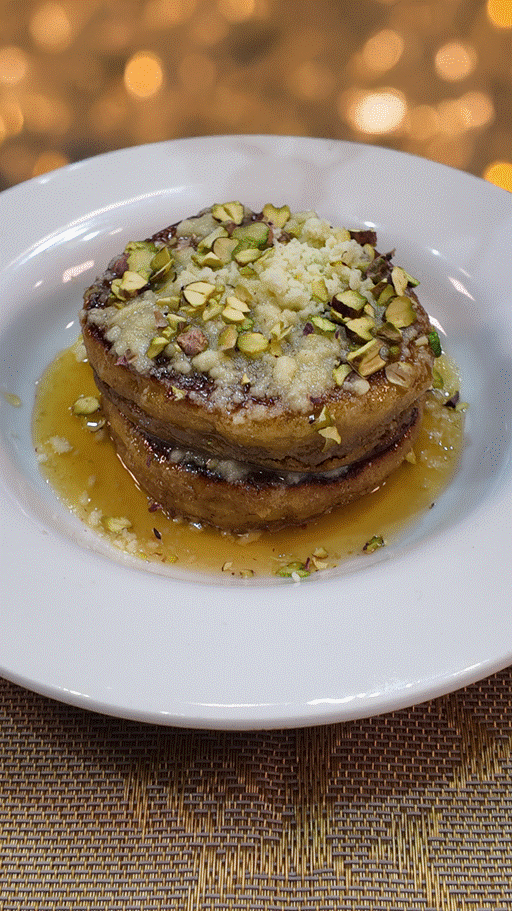
Fluffy Soufflé Gud Pude
Ingredients
1 Cup – Milk
½ Cup – Jaggery powder
1 Tsp – Fennel seeds powder
½ Tsp – Green cardamom powder
1 Tbsp – Vinegar
1 Cup – Refined flour
1 Tsp – Baking powder
½ Tsp – Baking soda
2 Tbsp – Ghee
¼ Cup – Khoya
1 Tsp – Vanilla essence
Oil for tempering
Water for steaming
1 Tbsp – Butter
1 Tbsp – Khoya
1 Tbsp – Butter
1 Tbsp – Khoya
1 Tbsp – Honey
1 Tbsp – Pistachio chopped
Method:-
- Prepare the jaggery milk
- Warm the milk slightly.
- Add jaggery powder and stir until fully dissolved.
- Mix in fennel powder and green cardamom powder. Let it cool to lukewarm.
- Activate the batter
- Add vinegar to the jaggery milk and mix well.
- Keep aside for 2–3 minutes.
- Make the batter
- In a large mixing bowl, sift refined flour, baking powder, and baking soda together.
- Add ghee and grated khoya mix well.
- Gradually add the milk mixture to the dry ingredients, whisking gently to avoid lumps.
- Whisk lightly until you get a smooth, thick, pourable batter (soufflé-like, not runny).
- Now add vanilla essence to the mixture and mix well.
- Rest the batter for 5 minutes.
- Pan cooking
- Heat a non-stick pan on low flame.
- Lightly grease with oil.
- Spoon batter into the pan (do not spread).
- Sprinkle 1 tbsp water around pancakes (not on them).
- Cover pan with lid.
- Cook on LOW heat for 4–5 minutes.
- 4. Flip carefully
- Gently flip pancakes using spatula.
- Add a few drops of water again.
- Cover and cook 4–5 minutes until cooked through.
- Serve Immediately
- Spoon the butter–khoya–honey mixture on top.
- Garnish with chopped pistachios.
- Finish with an extra dab of butter and khoya if desired.
So, this Lohri, take a moment, taste the sweetness and honour the rituals. Carry the memories forward. Because some recipes don’t just feed the body — they hold time, love, and everything we once were.
